

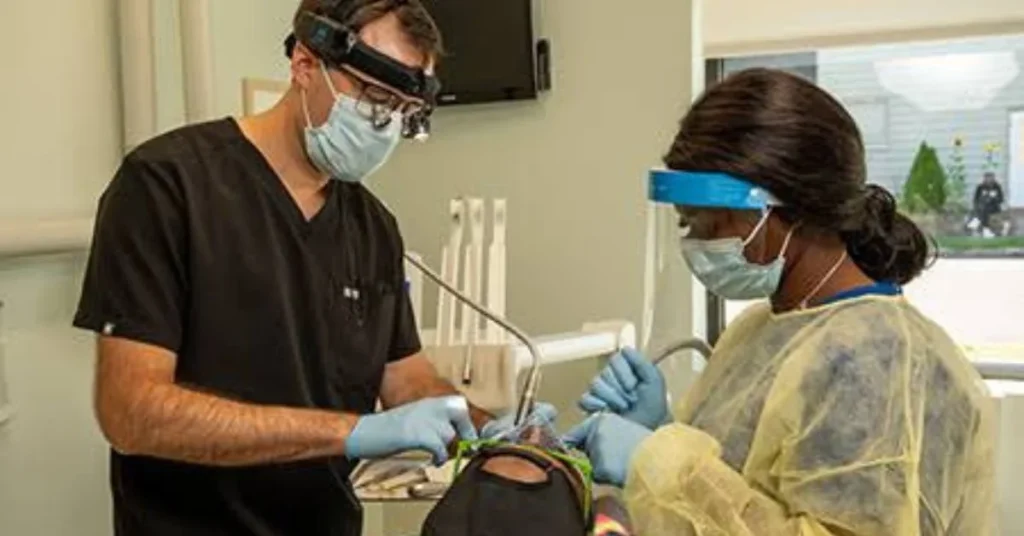
Oral cancer affects tens of thousands of Americans every year. It often goes unnoticed until it’s already advanced. But here’s the thing, it’s also one of the more treatable cancers when it’s caught early. Below: what it looks like, what raises your odds, a few habits that actually move the needle, and when a dentist typically sends you to see an oral surgeon in Duluth GA.
If you’ve been searching for an oral surgeon Duluth GA residents trust, there’s a good chance you’re thinking about more than a routine checkup. Oral cancer isn’t dinner party conversation. Most people don’t think about it at all until it touches their own life, or someone close to them. At Duluth Dental Studio, we’d rather you have this information now, not later.
Where It Shows Up
Almost anywhere in or around the mouth. Lips, tongue, inner cheeks, gums, floor of the mouth, roof of the mouth, even the upper throat, which doctors call the oropharynx. The tongue and the spot just underneath it are the most common locations. Lip cancer, oddly enough, tends to get caught earlier than the rest simply because you can see your own lips in a mirror every morning. The back of the throat? Not so easy. Most people have never actually looked back there, which is exactly why a dentist doing it twice a year is worth something.
Early changes are usually small. Painless, too. So they go unnoticed, sometimes for months, until a dentist happens to spot one during an otherwise routine visit.
Warning Signs
Not every sore means trouble. Canker sores, a scrape from a toothbrush, irritation from a denture, these are common and they heal in a week or two on their own. What should get your attention is anything that just won’t quit. A few examples:
- A sore or ulcer that’s still there after two weeks
- Red or white patches on the gums, tongue, or inside of the cheek
- A lump, or tissue that feels thicker than it should
- Numbness or pain that lingers for no obvious reason
- Trouble chewing, swallowing, or moving your jaw normally
- A hoarse voice, or that feeling like something’s stuck in your throat
- Loose teeth that gum disease doesn’t explain
Notice one of these? Don’t wait for your next cleaning to mention it. Pick up the phone. A call costs you two minutes. Ignoring it could cost a lot more.
What Raises Your Risk
Some habits and conditions push the odds up. Having a few of them doesn’t guarantee anything bad, and having none of them isn’t a guarantee either, but the list is worth knowing.
Tobacco, in pretty much any form, sits at the top: cigarettes, cigars, chewing tobacco, vaping, all of it. Heavy drinking is close behind, and if someone both drinks and smokes, the risk doesn’t just add up, it multiplies. HPV has quietly become a major factor too, and this one catches people off guard because it shows up in younger adults who’ve never smoked a day in their life. Then there’s sun exposure, which raises the risk specifically on the lips. A diet that’s light on fruits and vegetables matters. So does a family history of cancer, or an immune system that isn’t working at full strength.
The Numbers
The American Cancer Society puts out updated figures every year. Here’s where 2026 stands in the United States.
| Measure | Figure |
|---|---|
| New cases expected in 2026 | About 60,480 |
| Deaths expected in 2026 | About 13,150 |
| Average age at diagnosis | 64 years |
| Cases in adults younger than 55 | About 1 in 5 |
| Lifetime risk for men | About 1 in 59 |
| Lifetime risk for women | About 1 in 139 |
Here’s the part that surprises people. Cases in younger adults are climbing, and HPV is behind more of that increase than tobacco, even though tobacco is still what most people assume is the culprit. The old picture, an older man who’s smoked for decades, just doesn’t cover it anymore. So dentists check everyone now. Not just the folks who fit the old stereotype.
Source: American Cancer Society, Key Statistics for Oral Cavity and Oropharyngeal Cancers, based on Cancer Facts and Figures 2026, last revised March 2026 .
Prevention That Actually Helps
You don’t need to overhaul your entire life. A handful of habits, done consistently, do most of the heavy lifting.
Cutting back on alcohol and staying off tobacco matter more than everything else combined. Nothing else on this list comes close, honestly. Beyond that: more fruits and vegetables, fish instead of red meat when you can manage it, olive oil in place of whatever’s in the pantry. Brush twice a day. Floss, gently. Drink water. And if you’re outdoors a lot, keep an SPF lip balm around, it protects a spot people forget entirely.
Why Checkups Matter
A dental exam is not just about cavities, not even close. Every time you come in, your dentist is looking at the soft tissue in your mouth, your lips, your tongue, the back of your throat, checking for anything that doesn’t belong. That look is often the earliest chance anyone gets to catch a problem before it turns into something bigger. At Duluth Dental Studio, this happens at every visit, no extra appointment needed. If something catches our eye, we’ll say so, plainly, without the runaround.
When to See an Oral Surgeon in Duluth GA
Most minor issues stay with your general dentist. But sometimes more is needed: a biopsy to test tissue directly, removal of a lesion, surgical treatment after a diagnosis, or just a second, specialized set of eyes on something unclear.
A good oral surgeon in Duluth GA brings training and equipment built for exactly this, the mouth and the jaw, nothing else. If your dentist mentions a referral, try not to spiral. Most biopsies come back clear. Most.
Frequently Asked Questions
1. Can a dentist actually detect oral cancer?
2. How often should I be screened?
3. Is oral cancer curable if caught early?
4. What happens if my dentist finds something concerning?
5. Does Duluth Dental Studio check for oral cancer during regular visits?
One Last Thing
Oral cancer is not an easy topic. Nobody wants to think about it. But a little awareness, paired with a few consistent habits, genuinely changes outcomes.
Been a while since your last exam? Noticed something in your mouth that doesn’t feel right? Don’t sit on it. The team at Duluth Dental Studio can answer your questions, walk you through a full exam, and if it’s ever needed, connect you with a trusted oral surgeon in Duluth GA.
3575 Koger Blvd, Suite 160
Duluth, GA 30096
Phone: 770-696-4144
Email: staff@duluthdentalstudio.com


