

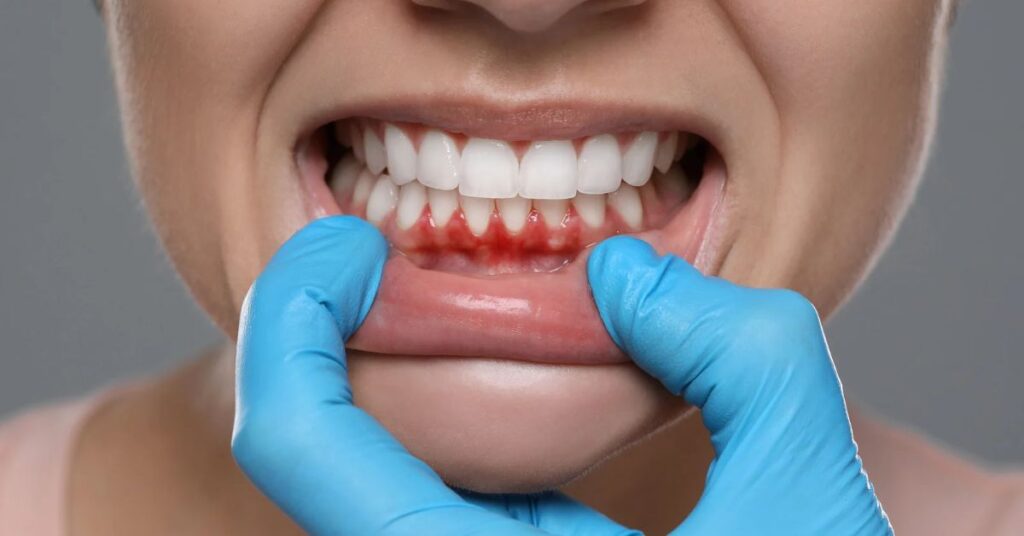
Most people don’t notice gum recession until something changes. A tooth looks a little longer, a cold drink causes a sharp twinge, or there’s a small notch near the gumline that wasn’t there before. By then the gum has already pulled back from part of the root, and according to Cleveland Clinic, receding gums can’t grow back. That makes prevention the better route. The causes are mostly everyday habits and conditions, and many can be managed. This post covers what causes recession, how to spot it early, and what helps. Early changes are often caught during deep cleanings and exams.
What Causes Gum Recession?
Gum recession, also called gingival recession, is the loss of gum tissue around a tooth, which exposes the root. It rarely has a single cause. The usual ones are:
- Gum disease. Plaque and tartar along the gumline inflame and infect the gums, and over time that can destroy gum tissue and the bone underneath. A CDC study in the Journal of Dental Research estimated that about 47% of U.S. adults aged 30 and older had periodontitis.
- Hard brushing. The research here is mixed. A 2007 systematic review in the Journal of Clinical Periodontology found the evidence linking toothbrushing to recession inconclusive, but hard bristles and heavy pressure are still widely treated as risk factors.
- Tobacco. Smoking and chewing tobacco weaken the body’s defenses against gum infection.
- Grinding and clenching, which put extra force on teeth and the tissue around them.
- Crooked teeth or an uneven bite, which can concentrate pressure on certain teeth.
- Thin gum tissue, which tends to run in families.
- Lip or tongue piercings and poorly fitting partial dentures that rub against the gums.
What Are the Signs of Receding Gums?
Recession usually develops over years, so the early signs are easy to overlook. Teeth may look longer than they used to. The root can show as a darker, yellowish band near the gumline, and your fingernail may catch on a notch where the tooth meets the gum. Many people first notice sensitivity to hot, cold, or sweet foods. Red, swollen, or bleeding gums alongside recession point toward gum disease. When only one tooth is affected, the cause is often local, such as a bite that hits that tooth too hard or brushing harder on that side.
Dentists describe recession in stages, from mild, where a small part of the root shows, to advanced, where much of the root is exposed and teeth may loosen. Exposed roots are more vulnerable to decay than enamel-covered crowns, which is one more reason to catch recession early.
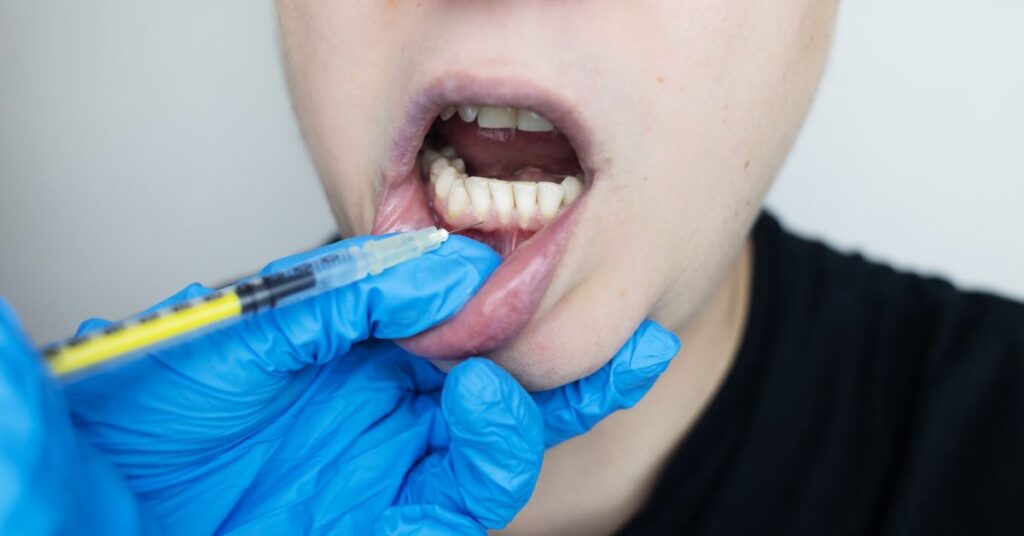
How Do You Prevent Receding Gums at Home?
Most of the work comes down to a few daily habits:
- Brush gently. Use a soft-bristled brush for two minutes, twice a day, with small circles rather than a back-and-forth scrub. If you tend to press hard, an electric brush with a pressure sensor can help.
- Floss with care. Done correctly, flossing does not cause gum recession. Curve the floss around each tooth in a C shape and slide it gently. Don’t snap it down into the gums.
- Choose gentle products. A soft or extra-soft brush and a low-abrasion fluoride toothpaste are the usual advice. If sensitivity bothers you, a desensitizing toothpaste can help, though Cleveland Clinic notes it can take several weeks to work.
- Stop using tobacco, or cut back as far as you can.
- Ask about a night guard if you grind your teeth. A sore jaw in the morning or flattened teeth are common clues.
- Take out lip or tongue jewelry that touches your gums.
Can Gum Recession Be Reversed?
Not on its own. Gum tissue doesn’t regenerate, so rinses, oil pulling, and other home remedies for receding gums can’t rebuild what has been lost. What you can do is stop it from progressing. Treating the cause, whether that’s gum disease, grinding, or brushing technique, often keeps mild recession stable. Fluoride varnish or desensitizing treatments can ease sensitivity in the meantime.
For more advanced recession, gum graft surgery is the option Cleveland Clinic describes as the most predictable and long-lasting treatment. A periodontist, a gum specialist, usually performs it, using tissue from the roof of the mouth or donor tissue to cover the exposed root. Not everyone needs a graft. A mild recession that isn’t getting worse may only need monitoring.
How Does a Dentist Help Prevent Gum Recession?
A dentist can measure how far the gum has pulled back and record it, so later visits show whether it’s changing. They check for gum disease, which is the cause that most needs treatment, and remove tartar you can’t brush away. If infection has spread below the gumline, a deeper cleaning called scaling and root planing may be needed.
A dentist can also look at your bite and grinding habits, suggest a night guard, treat sensitive roots with fluoride varnish or bonding, and refer you to a periodontist if a graft is worth considering.
Final Thoughts
Gum recession is slow, and the tissue doesn’t grow back on its own, so the habits above and regular exams do most of the protecting. If your teeth look longer or feel more sensitive than they used to, have a dentist look at them rather than waiting. You can call Duluth Dental Studio at 770-696-4144 or book online.
FAQs
1. How can I tell if I am brushing too hard?
Look at your toothbrush. If the bristles splay out or look frayed within a few weeks, you’re pressing too hard. Sore gums right after brushing is another clue.
2. Why are my gums receding on just one tooth?
Recession on a single tooth usually has a local cause, such as brushing harder on that side, a tooth that sits out of line, or too much bite pressure. A dentist can look for the cause.
3. Does gum recession always need surgery?
No. Mild recession often needs only better habits and professional care to keep it stable. Surgery is mainly for advanced cases where roots are badly exposed or the gum tissue is very thin.
4. Is gum recession painful?
Not always. Many people only notice sensitivity to temperature or sweets. Pain, swelling, or bleeding may point to gum disease and should be checked soon.
5. How often should I see a dentist to prevent gum recession?
Many dentists recommend a checkup and deep cleaning every six months. People with gum disease or early recession may need to come in more often.
Author
Dr. Maulik Gandhi earned his Doctor of Dental Surgery degree from Indiana University and brings years of hands-on experience paired with a patient-first approach to every case. At Duluth Dental Studio, he provides everything from preventive checkups to cosmetic and restorative treatments.
3575 Koger Blvd, Suite 160
Duluth, GA 30096
Phone: 770-696-4144
Email: staff@duluthdentalstudio.com


